Fostering a culture of growth and design excellence
Problem
Hiring good designers for an enterprise software company is a perennial challenge, especially if your corporate website has all of the constraints of the typical corporate website.
Once you hire a good designer — how do you onboard, grow, and retain them?
Role
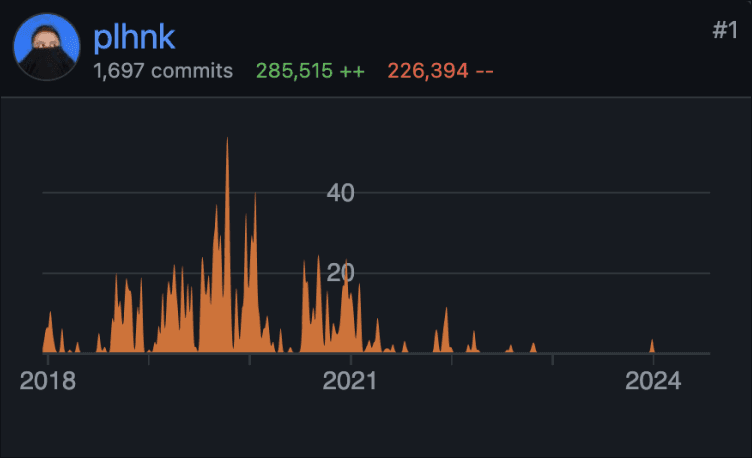
As one of the Design Managers on the team, I contributed to the content strategy and design. In my spare time, I was the lead developer for the site, contributing over 250k lines of code.
Contributions
- Content Strategy
- Information Architecture
- Wireframing
- Interaction Design
- Prototyping
- Usability Testing
- Quality Assurance
- Frontend Development
- JSX / SCSS / MDX
Impact
Reduced Time to Hire300﹪
Designer Retention240﹪
Designers Hired40
Solution
Creating a home on the web for our small, yet growing, design team was one way to compete with cool startups who were able to lure top talent.
On one hand, yes — this was just a few websites — but it became so much more, a tool and place for us to learn and grow together.
Along the way, I learned a ton about management, engineering, marketing, and how hard it is to design for designers.
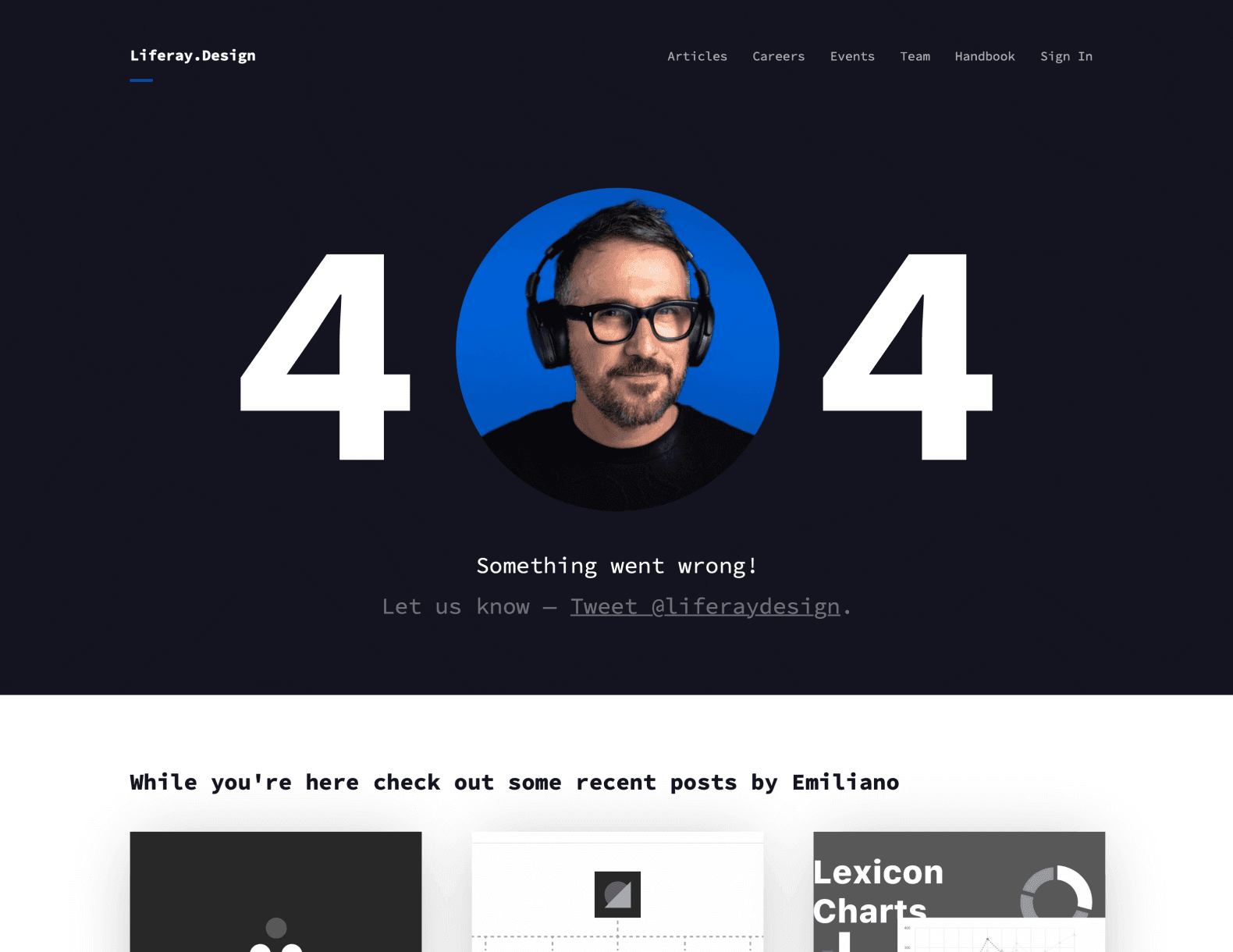
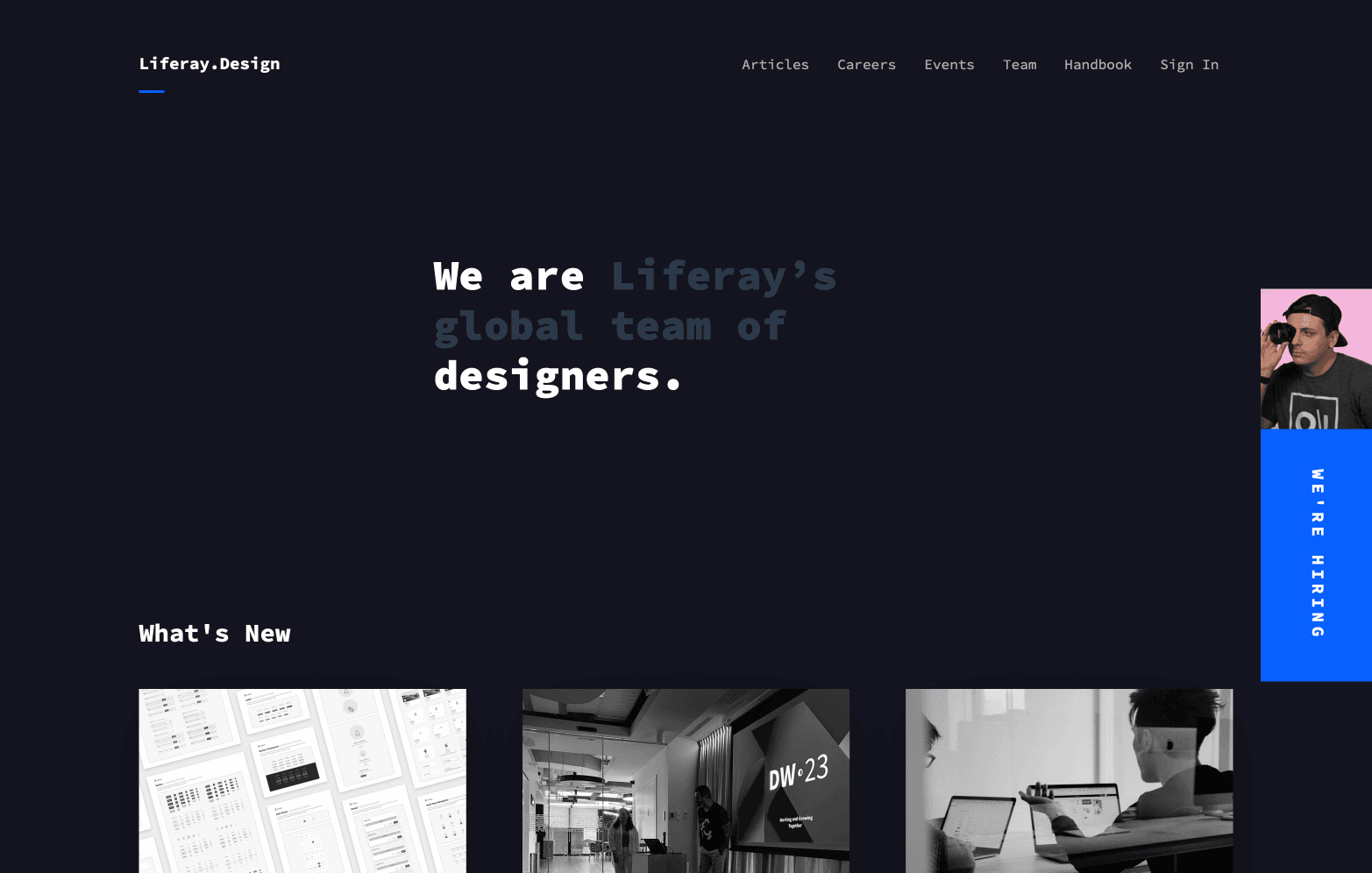
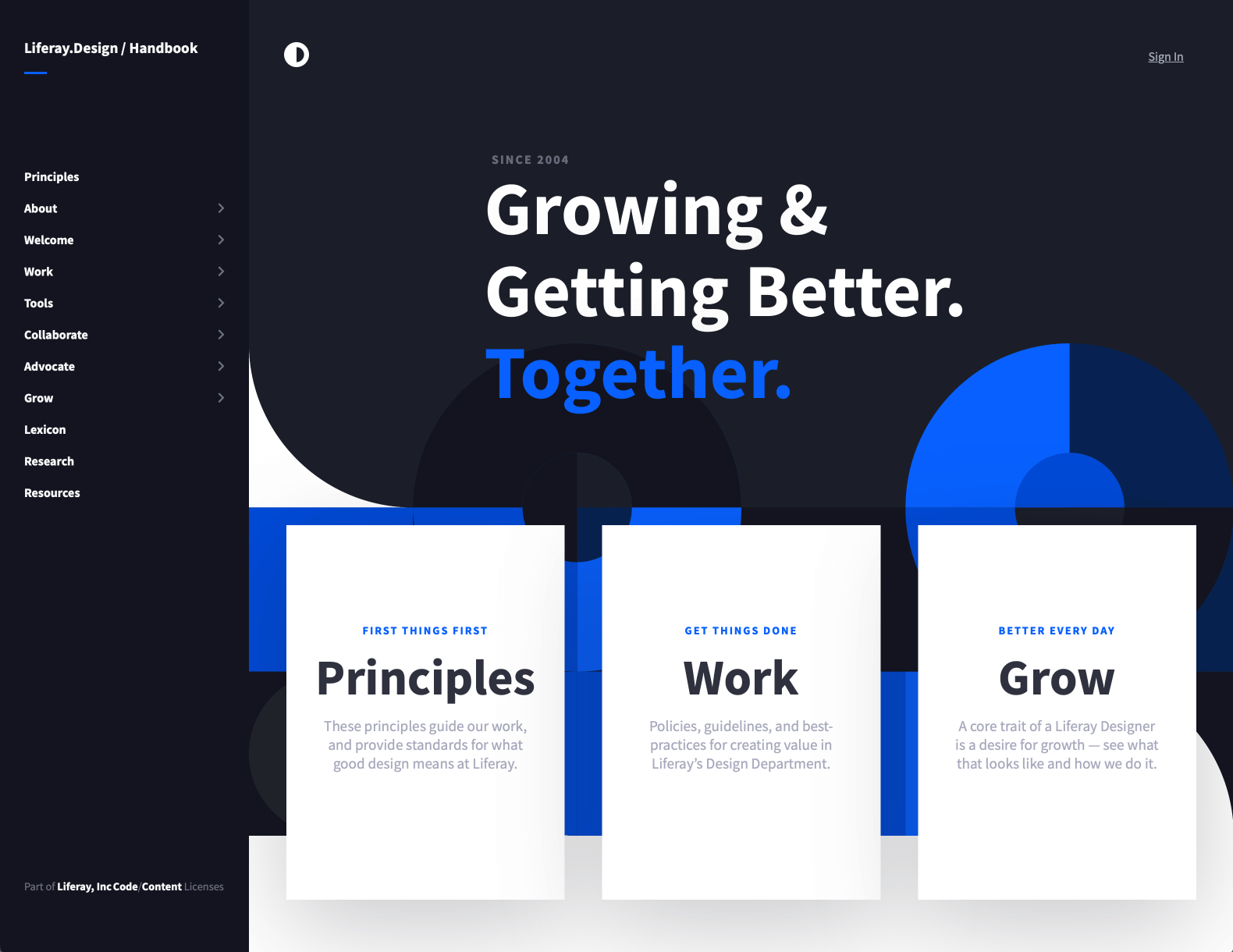
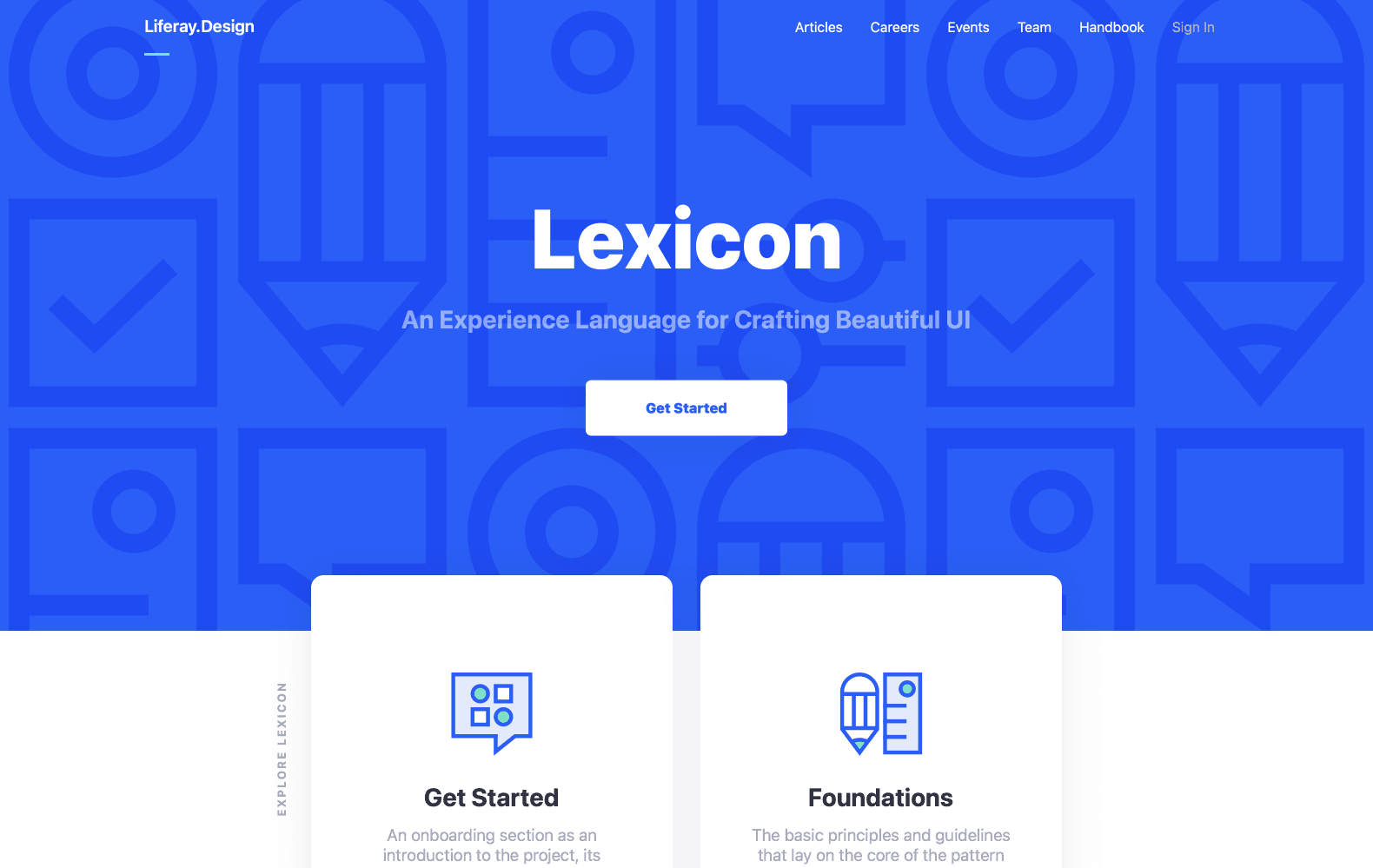
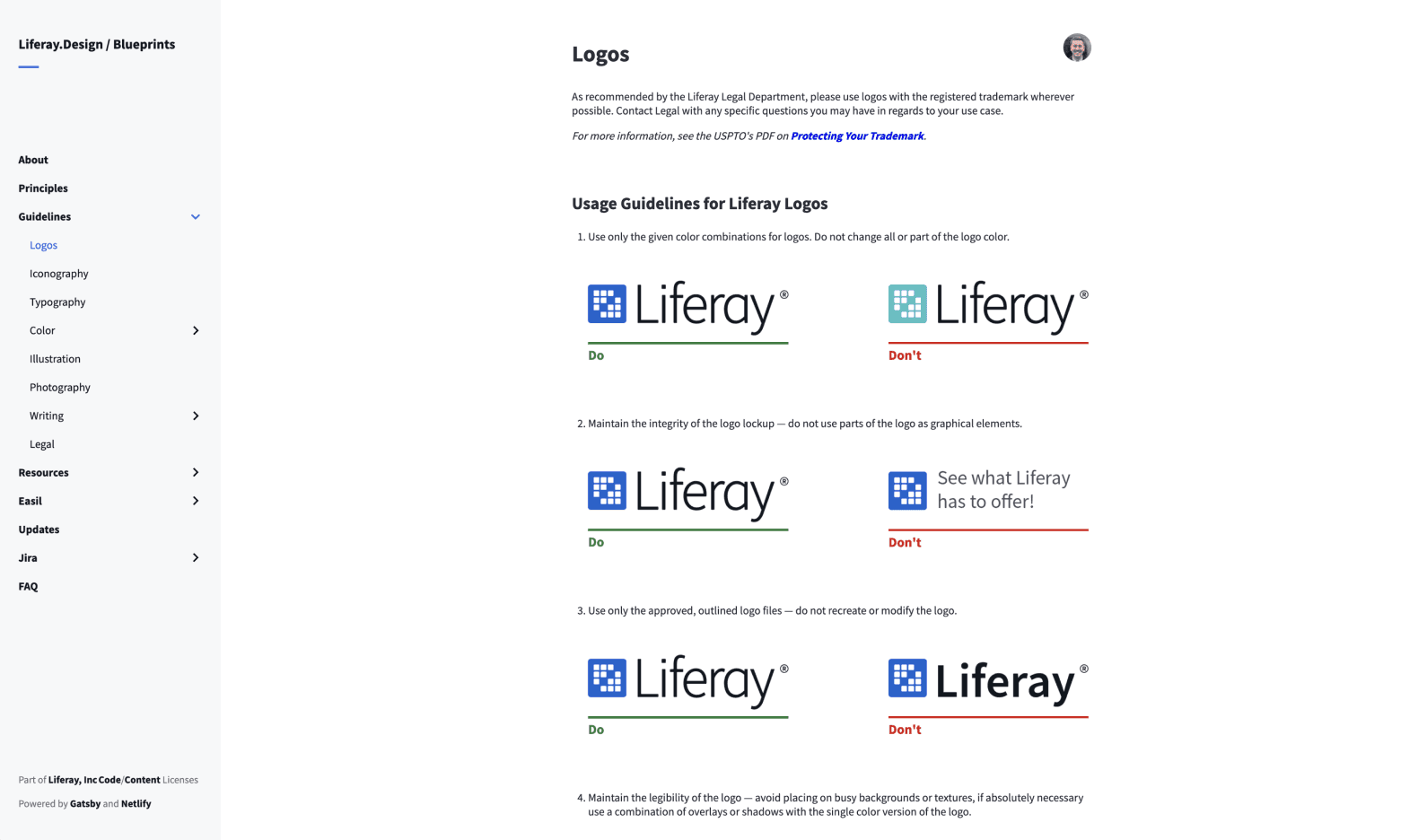
The Liferay.Design Ecosystem
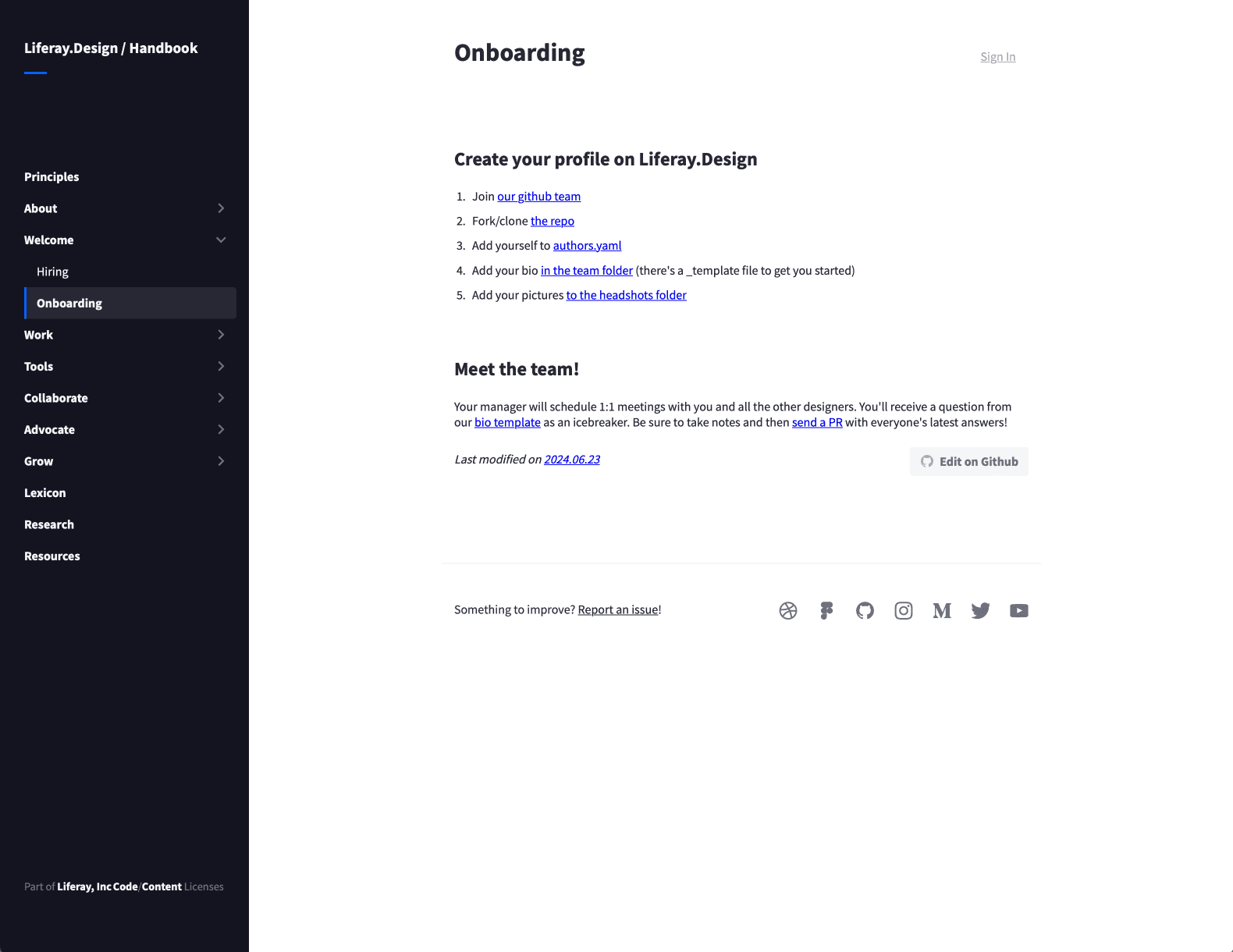
What initially started as a landing page for our first Design meetup grew to a monorepo that held our entire DesignOps library, including our Department Handbook and Design System documentation.
I learned how to use Firebase Authentication and created an "internal only" brand guideline section of the site.
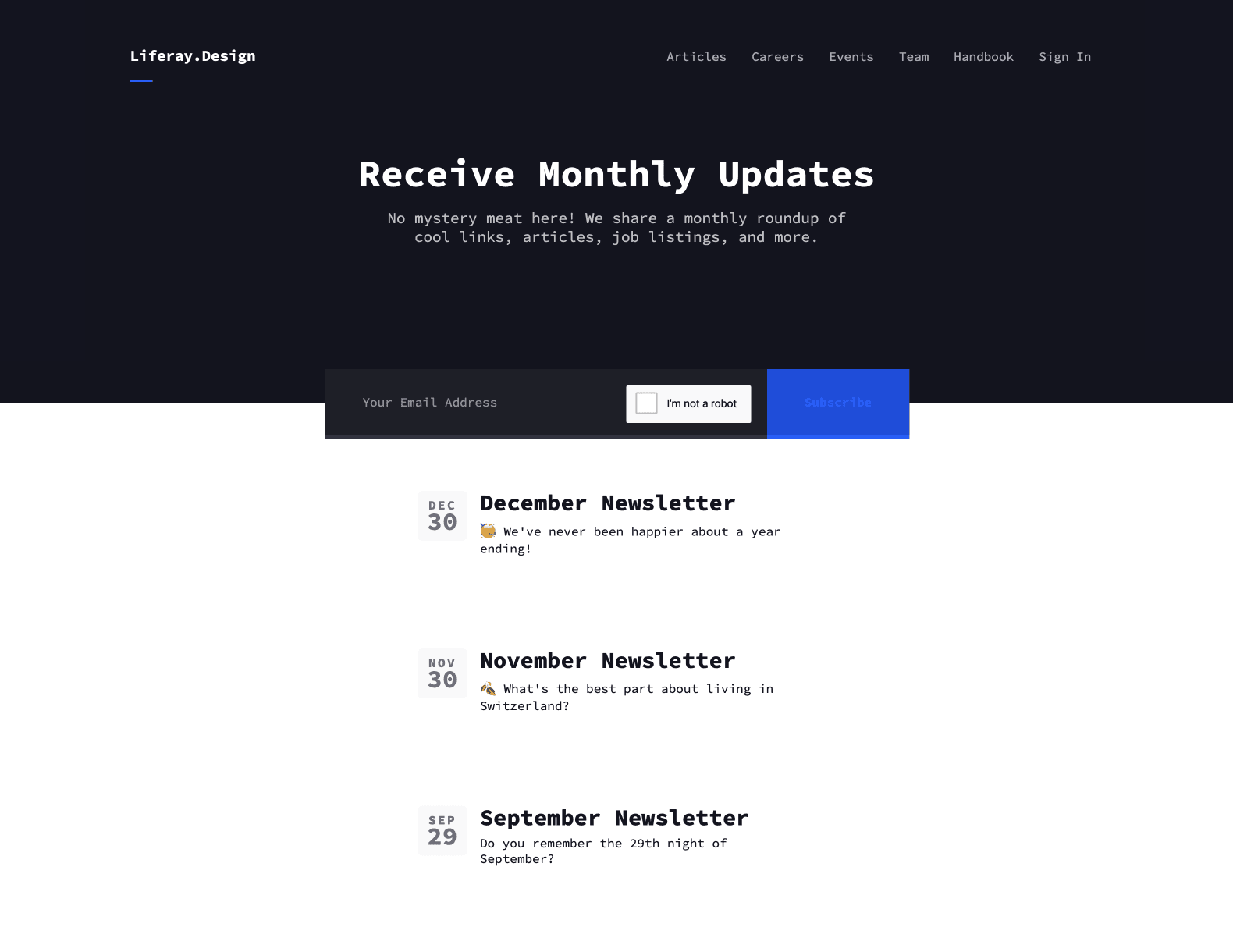
I also connected to external tools and services like Cloudflare to manage domains and even a MailChimp integration to automatically generate a newsletter archive.
Hire & Onboard
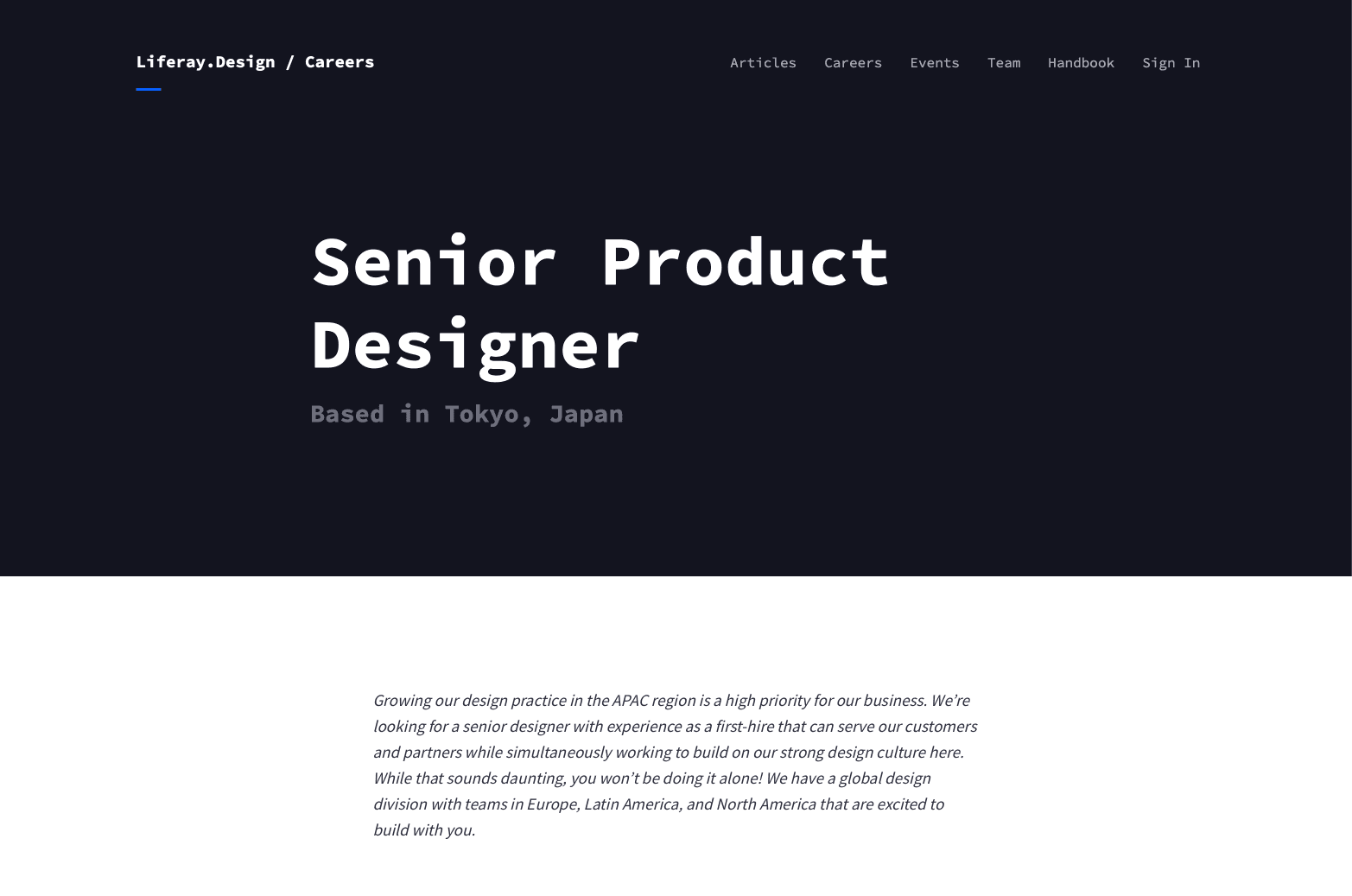
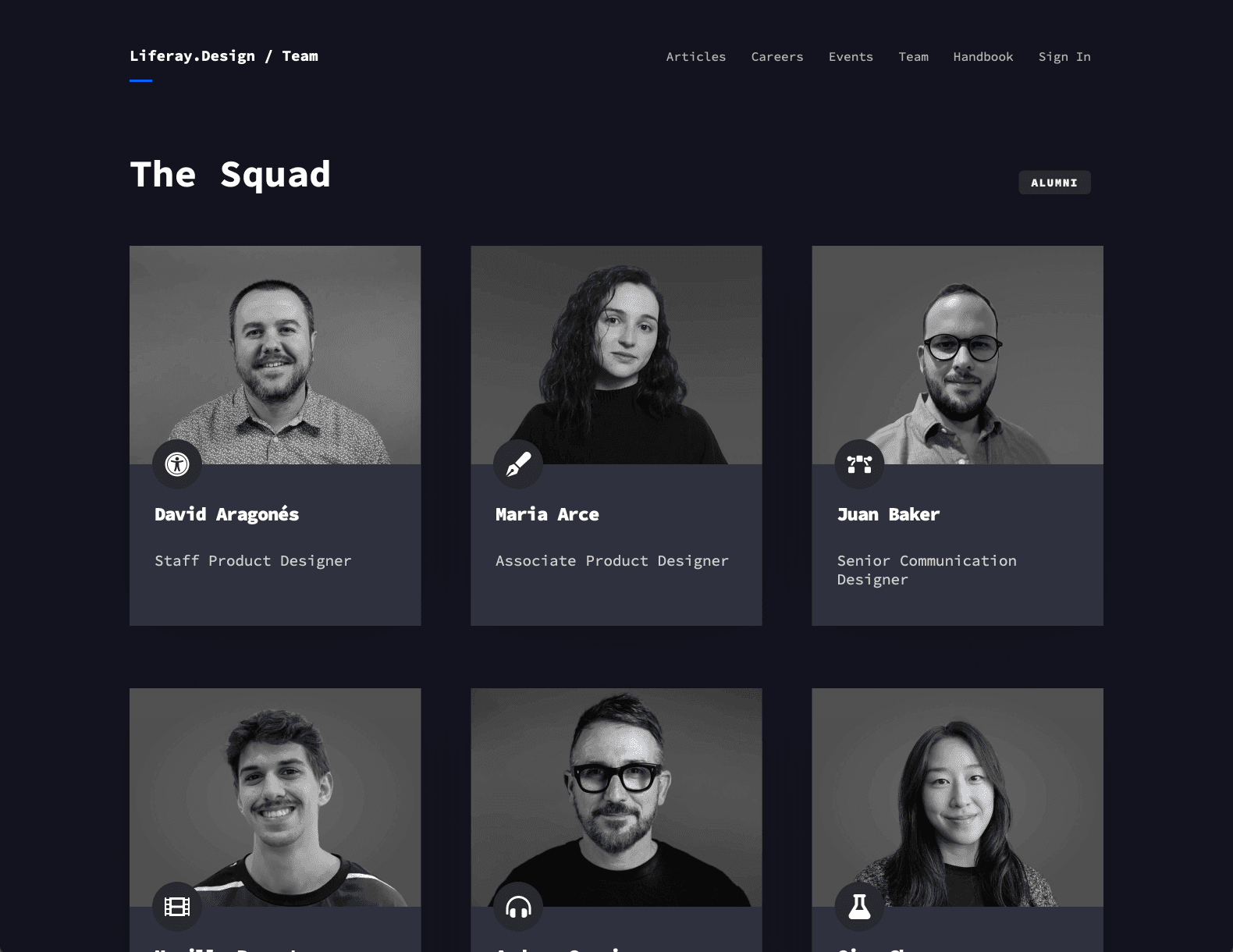
A huge challenge we faced was awareness. Despite being in business for over 10 years with offices in major cities across the globe, almost no one in the design community knew about Liferay.
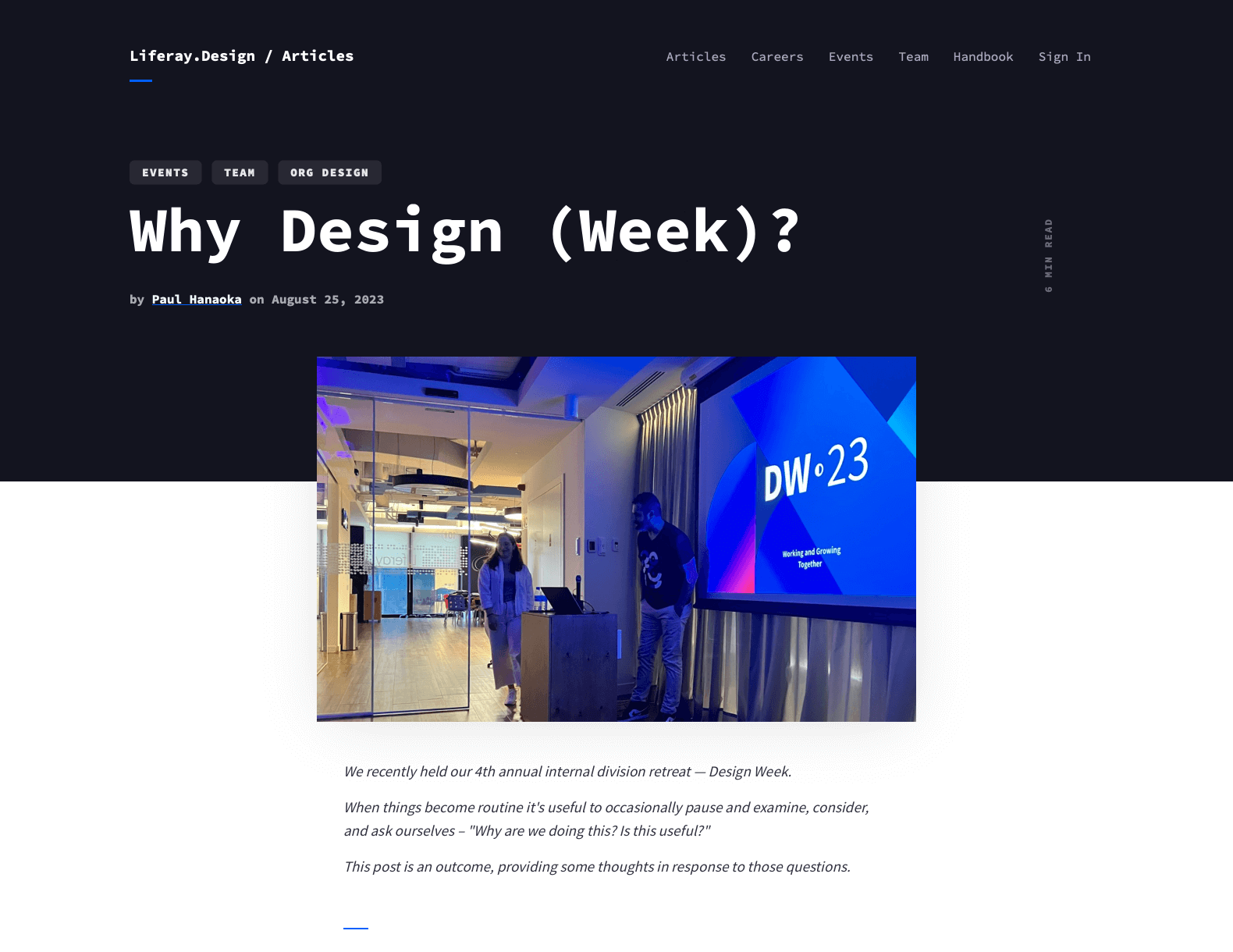
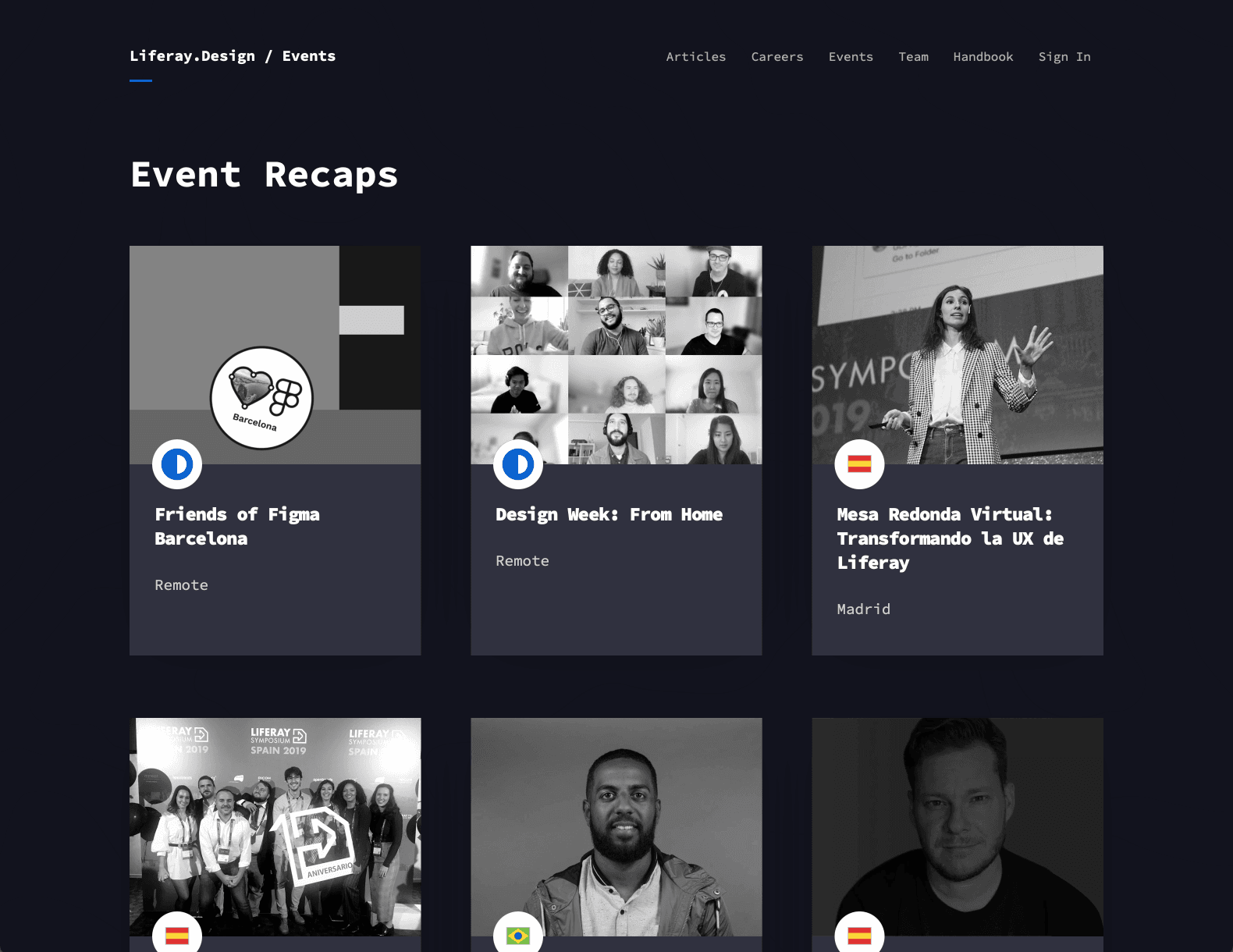
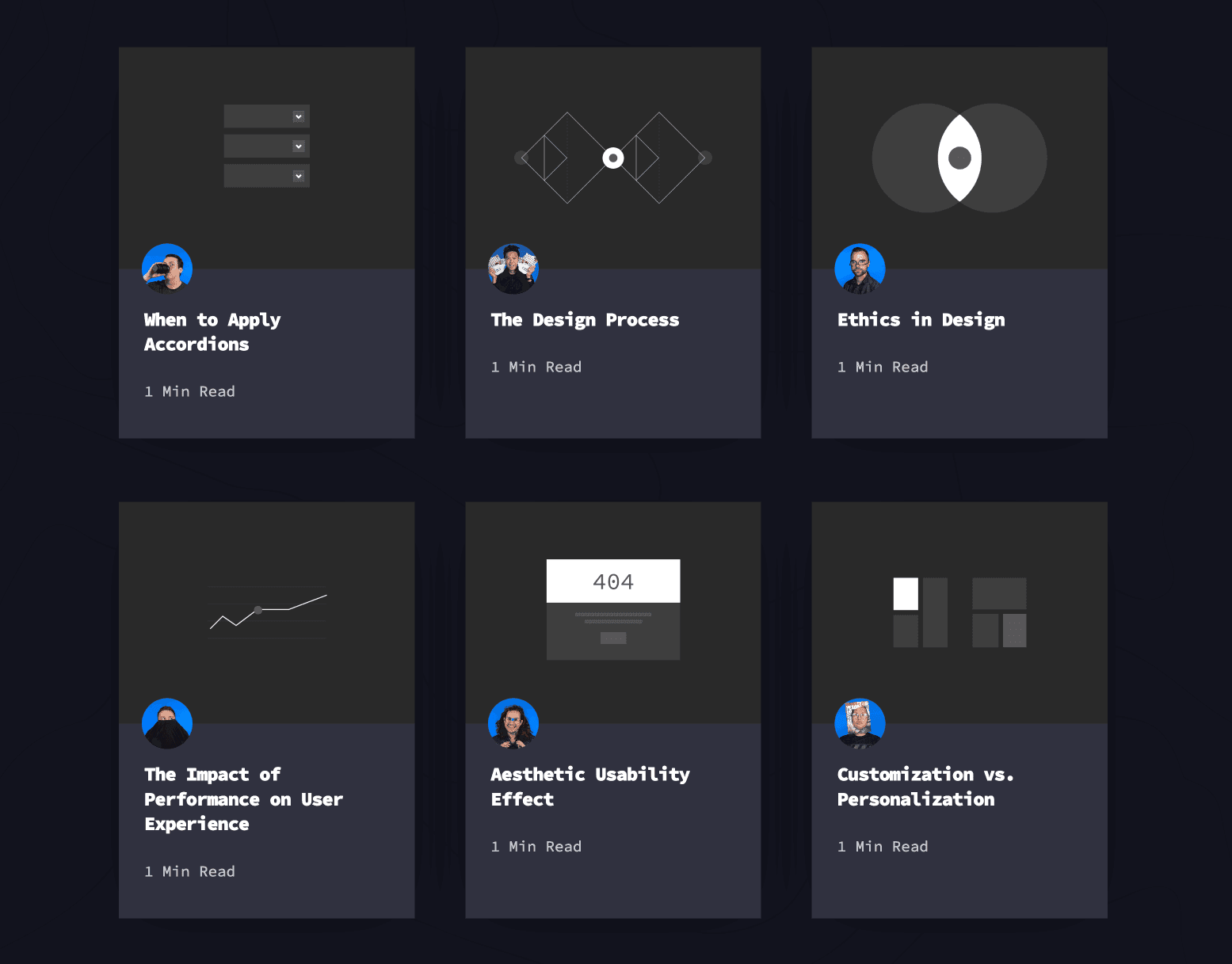
To address this, Design Managers in each region (I was the lead Manager in North America) hosted events, wrote articles, and encouraged the team to publish work and writing as a way to share knowledge and generate traffic to the site.
When we had built a good rythm of contents and events, I started a monthly newsletter which grew to 170 subscribers after a year. While not amazing numbers, it definitely helped legitimize our team and even though people still didn’t really know about us, the site and all the content helped Designers immediately feel like they wanted to be part of the team.
Grow & Get Better
Liferay’s designer retention was in-line with the industry average of 1-2 years. While this is fine if you’re a large company and can attract talent easily, this rate made it exceptionally challenging to improve the design maturity of our company.
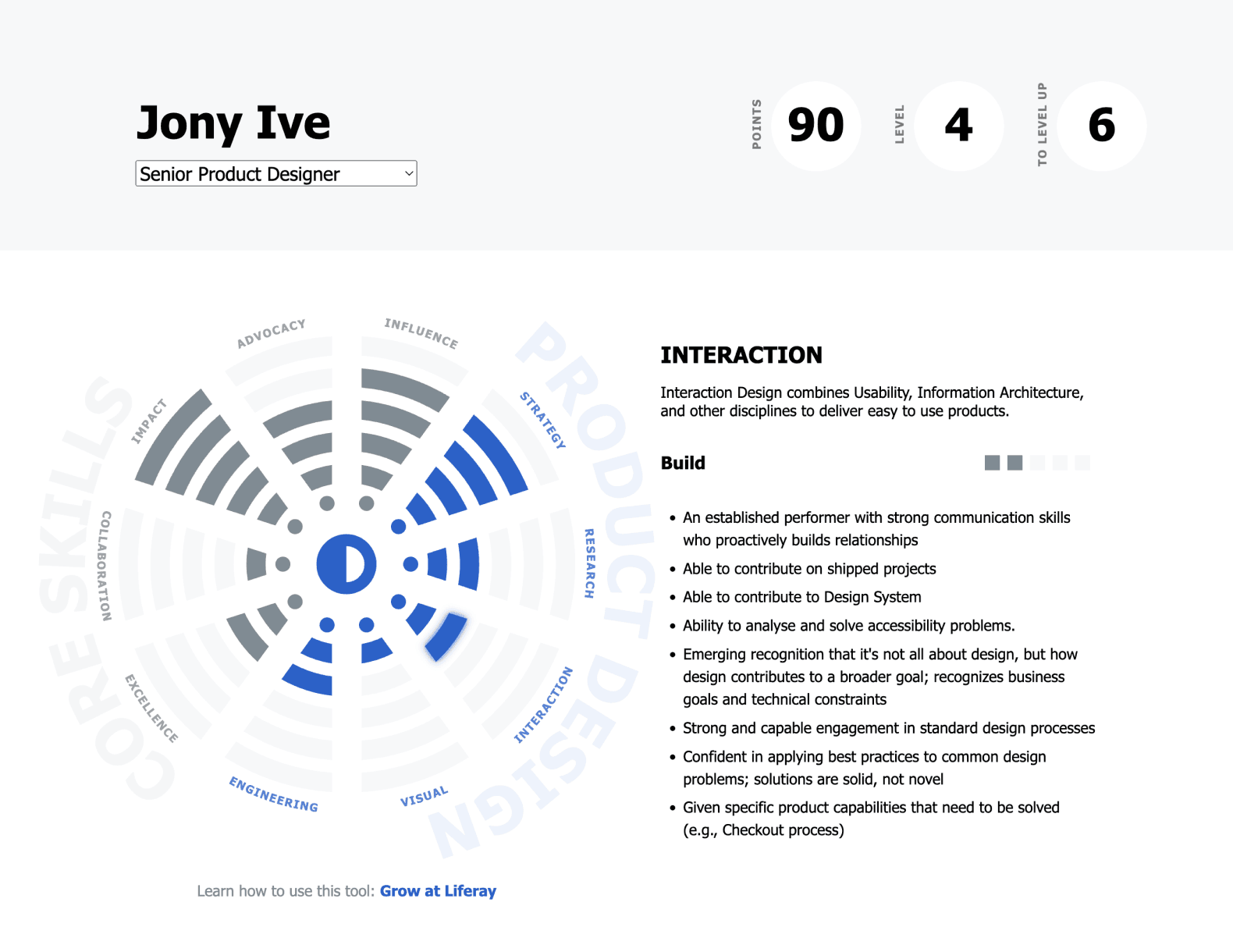
One initiative that I contributed heavily to was creating career paths for Designers, including tool that I forked from the Medium engineering team, adapted to our needs (including connecting to a Google doc as a content source) and published as a standalone site to help managers level and grow their teams.
Along with many other efforts led by Juan Hidalgo, helped to create a culture of learning and growth that retained Designers for 2 to 3x longer than industry average.
By the Numbers
Newsletter Subscribers170
Weekly Visitors1K+
Pageviews1M+
In Retrospect
Was this a good idea?
Absolutely, yes. The team loved being able to have one place to go and find almost anything they needed.
It also served a great tool teach Designers technical concepts, tools, and workflows. I trained over 20 Designers, who had never used Git before, how to clone a repo, install dependencies, make changes in code, and submit pull requests.
Would I do it again?
"It depends."
There are many factors to consider. At the time I started this project, I didn’t realize how much of an investment it would be. While it was a great way to learn a lot, and especially helped me level-up as a react developer, I would thoroughly consider the goals, opportunity costs, alternatives, and long-term impacts before I would undertake something like this again.